
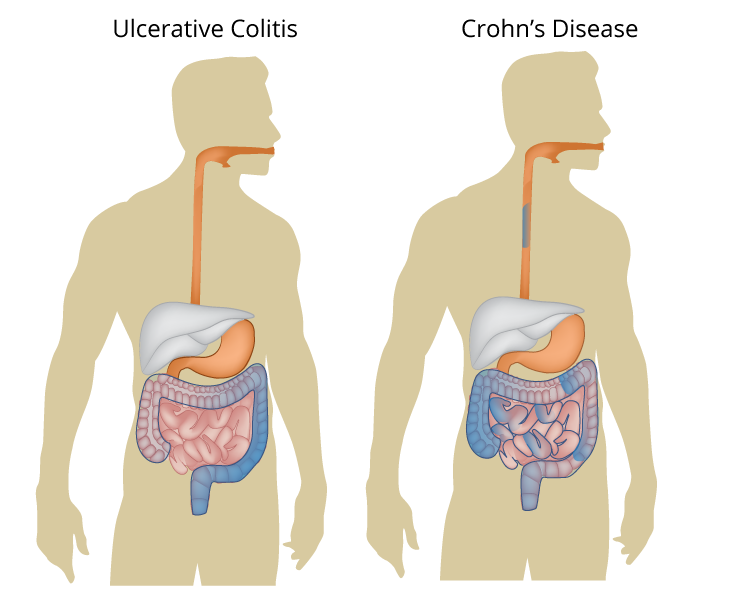
Inflammatory Bowel Disease (IBD) is a comprehensive term describing diseases that are characterized by inflammation of some or all of the digestive tract. The two most common types of IBD are ulcerative colitis and Crohn’s disease. Both involve abdominal pain, diarrhea, fatigue and weight loss, and each is characterized by an abnormal reaction by the body’s immune system. Neither is an infection that can be passed to other people.
ULCERATIVE COLITIS
Ulcerative colitis is an inflammatory condition that affects the lining of the large intestine.
Symptoms
The severity of ulcerative colitis symptoms depends on the amount of colon that is affected and the degree to which the colon is inflamed.
- Persistent diarrhea, sometimes accompanied by blood or mucus
- Abdominal cramping or pain
- Urgent need to move bowels
- Feeling of incomplete evacuation after a bowel movement
- Fatigue
- Fever
- Loss of appetite or weight loss
Causes
Scientists are unsure of what causes ulcerative colitis, but have determined that a collection of factors may influence who contracts it. It is proposed that when a foreign substance enters the body, the immune system is triggered to respond but doesn’t turn off when the substance is gone causing the immune system to attack the lining of the colon.
Diagnosis
No single test can confirm whether you have UC. Your doctor will diagnose by:
- taking a medical history
- performing a physical exam
- performing diagnostic tests
Treatment
There is no cure for ulcerative colitis, and the treatment depends on the severity of symptoms that the patient experiences. The focus of a treatment plan is to
- Reduce inflammation
- Prevent symptom flare-up
- Maintain remission of symptoms
Keeping symptoms from flaring up improves the long-term prognosis by limiting complications. Your doctor will likely recommend
- Medications, such as mesalamine compounds, immune system suppressants, antibiotics, corticosteroids
- Dietary changes to minimize flare-ups
Some patients also may need
- Nutrition therapy
- Surgery
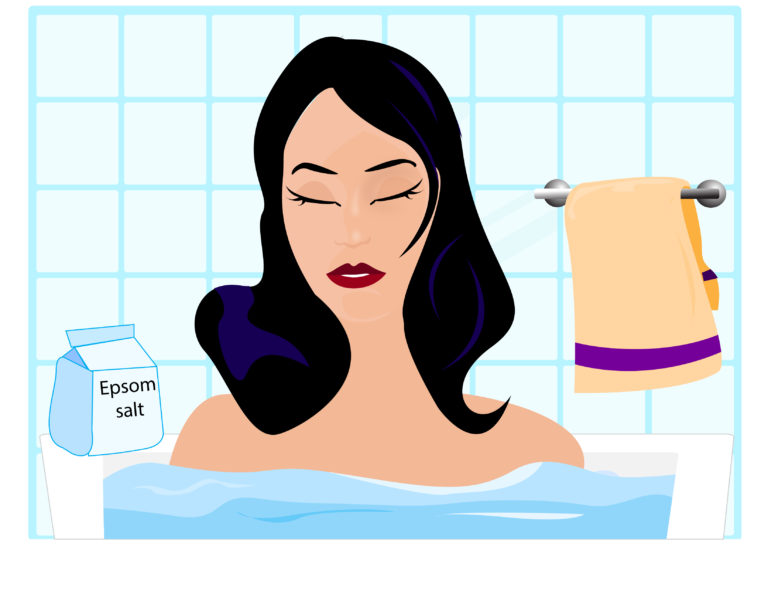
sitz bath
To take a sitz bath in your home bathtub:
- Fill a bathtub with 3 to 4 inches of warm water without bubble bath or soap.
- Add up to 2 cups of Epsom salts, if desired
- Soak three times a day for 15-20 minutes, ensuring that your bottom area is covered.
- Afterward, gently pat dry the area using a soft towel.
- Ointments, Creams and Suppositories A variety of ointments, creams and suppositories are available over-the-counter to help with the discomfort and itching associated with hemorrhoids. Some contain phenylephrine or similar medicines which work by shrinking the blood vessels in in the rectal area. Others contain hydrocortisone, a steroid that works by decreasing inflammation and shrinking the swollen areas. Finally, some contain lidocaine or pramoxine, which are local anesthetic that provide pain relief. Some medications contain a mixture of these preparations. Common brands are
- Preparation H (various formula available that contain one or more of the phenylephrine, hydrocortisone and lidocaine medications)
- Anusol-HC, ProtoCare HC Protosol-HC (Hydrocortisone)
- HemAway (phenylephrine and lidocaine)
- Recticare (lidocaine)
- Other topical options You may find relief from the use of pretreated wipes or witch hazel. Witch hazel is an astringent that can be obtained inexpensively and is known to help with relieving swelling and discomfort of hemorrhoids.
- Medical Intervention If home treatment fails to alleviate your symptoms, medical intervention may be necessary.
- Rubber band ligation is an in-office procedure that involves placement of a rubber band ring around the base of an internal hemorrhoid. With a restricted the blood supply, the hemorrhoids shrinks and eventually drops off. Our office offers the CRH O’Regan System® a simple in-office hemorrhoid banding treatment. To find out more about Hemorrhoid Banding, click here.
- Injection sclerotheraphy—is an in-office procedure in which a hardening chemical is injected into hemorrhoid to make it clot
Non surgical procedures are successful in more than 80% of patients suffering with hemorrhoids. For those who do not respond well, you doctor may recommend a surgical procedure.
CROHN’S DISEASE
Crohn’s disease is an inflammatory condition that can affect any part of the gastrointestinal tract from the mouth to the anus, but most frequently affects the end of the small bowel and beginning of the colon.
stine.
Symptoms
Every patient experiences Crohn’s disease differently. The most common symptoms that characterize Crohn’s are
- Persistent diarrhea, sometimes accompanied by blood or mucus
- Abdominal cramping or pain
- Urgent need to move bowels
- Fatigue
- Fever
- Loss of appetite or weight loss
- Mouth sores
Causes
Doctors do not know the cause of Crohn’s disease, although genetics may play a role since it tends to run in families. Experts have concluded that Crohn’s may be caused by a heightened autoimmune reaction to bacteria present in the digestive tract.
Diagnosis
No single test can confirm whether you have CD. Your doctor will diagnose by:
- taking a medical history
- performing a physical exam
- performing diagnostic tests
Treatment
There is no cure for Crohn’s disease and no single treatment works for all patients. The focus of a treatment plan is to
- Reduce inflammation
- Prevent symptom flare-up
- Maintain remission of symptoms
Controlling and eliminating inflammation improves long-term prognosis. Your doctor will likely recommend
- Medications, such as mesalamine compounds, immune system suppressants, antibiotics, corticosteroids
- Dietary changes to minimize flare-ups
Some patients also may need
- Nutrition therapy
- Surgery
While the initial diagnosis of Crohn’s or ulcerative colitis can be overwhelming, most people are able to living a fulfilling and productive life. It is important to learn as much as possible about the condition, to partner with the medical team doctor to make a treatment plan, and to maintain a good support system with family, friends and others with IBD.
Resources: