
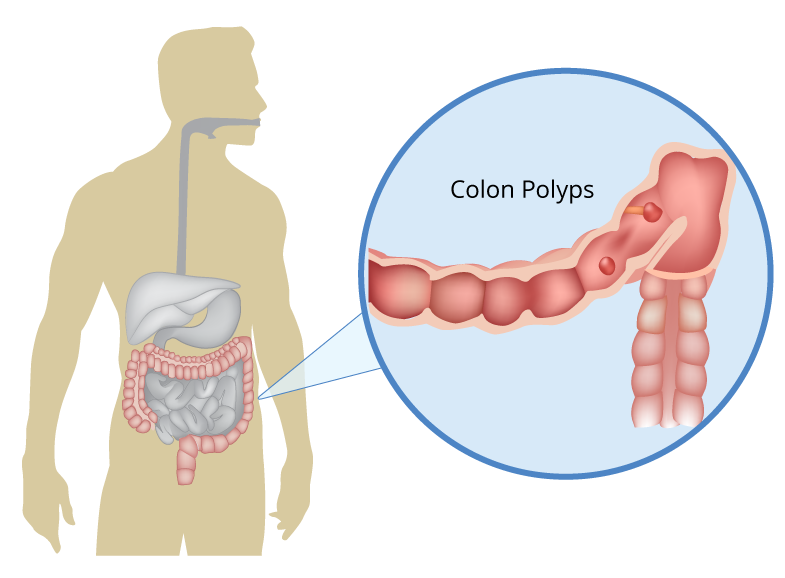
A colon polyp is a small growth found on the intestinal lining. While most polyps are not dangerous, over time some can develop into cancer. Polyps can be removed during a colonoscopy, a procedure allowing the doctor to examine the inside of the large intestine. The removal of polyps is painless and can be accomplished at the time of a colon cancer screening.
Symptoms
Colon polyps usually don’t cause symptoms in the early stages. Larger ones occasionally cause blood in the stool. Consequently having a screening colonoscopy is important for all individuals over 50, whether or not they have experienced symptoms
Who should be checked for polyps?
While all adults have a chance of developing colon polyps, they are more prevalent in some individuals. Those mostly likely to develop polyps are those who
- Are aged 50 and older
- Have a family history of colon cancer or polyps
- Have inflammatory bowel disease such as Crohn’s or ulcerative colitis
- Smoke or drink alcohol
- Are overweight, or don’t exercise
The American Cancer Society, the American College of Gastroenterology and a host of other health organizations are united in their recommendation that all adults undergo a screen colonoscopy starting at age 50. Individuals at an increased risk for developing colorectal cancer should discuss the need an earlier test.
Diagnosis
Most all polyps are found during a screening colonoscopy test for cancer.
Treatment
Polyps are removed with a special tool during a screening colonoscopy and are sent to a pathologist for testing to see if cancer is present.